„Dimitrie Cupovski“ 13, 1000 Skopje +38923244000 ic@mchamber.mk
„Dimitrie Cupovski“ 13, 1000 Skopje +38923244000 ic@mchamber.mk
.jpg)

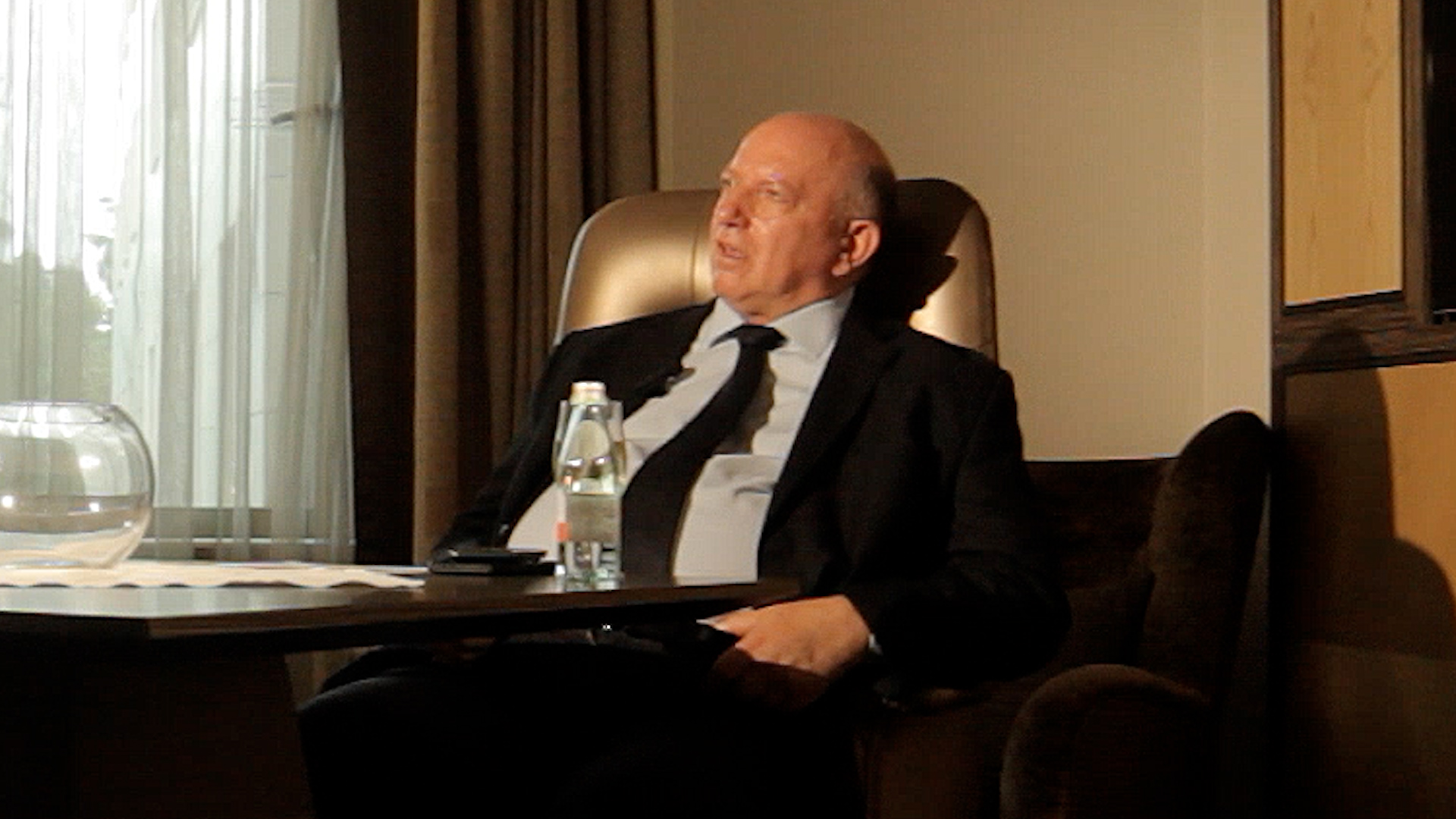
“I have never given an interview like this before. I have been offered various interview opportunities, but I always waited for the right moment. I accepted this interview immediately because I am speaking with a person who understands business and the economy, who knows what life is, but also its hardships, who knows what pleasures are, but also responsibilities. That is precisely why today it is the hardest for me because I have an obligation, and at the same time the easiest,” emphasized Dragan Bokan, President of the Board of Directors of Voli Trade, in the latest episode of the Business Club Plus podcast with Branko Azeski.
Bokan noted that he is not surprised by the fact that around 15,000 companies voluntarily hold membership in the Economic Chamber of North Macedonia, as he believes this is the result of the work of the Chamber’s President, who views economic processes from a different perspective.
Speaking about successful business management, Bokan stressed that the key lies in managing people: “For a good business, you need to know how to manage, how to select the best staff, guide them, and put them into function,” advice which, as he said, he received from his close friend and associate Miroslav Mišković, owner of the company Delta Holding.
He emphasized that participation in international conferences is very important, especially for small companies, because it gives them the opportunity to hear new information and experiences from larger companies, as well as to connect with them in different ways.
When asked about the three key disparities in society—(1) the relationship between capital and labor, (2) the relationship between the active and dependent population, and (3) the continuity in the application of legal regulations when governments change—Bokan stated that as an owner he provides higher salaries for employees than other companies in Montenegro, as well as opportunities for personal and professional development. However, he stressed that productivity is equally important and must be delivered by employees if companies are to grow and survive in the market. According to him, Balkan markets are still in transition, and businesses must adapt to this reality. He believes this will remain the case until accession to the European Union.
“When the supply of labor is greater than demand, productivity is higher. Otherwise, as is the case today, productivity declines,” he added.
According to Bokan, politics should belong to politicians, and business to businesspeople. Politics and business can communicate in only one segment—investments and the determination of strategic directions that will contribute to the country’s progress.
Asked about the future of Montenegro over the next ten years, Bokan stated that he envisions it as a tourism-developed country, which would also enable economic growth. However, he emphasized that certain issues must be left in the past, nationalism must be overcome, and the focus placed on the economy, support for domestic companies, tourism, spatial valorization, and environmental protection. As key priorities, he highlighted the need for a clear tourism strategy and a development strategy for Lake Skadar, northern Montenegro, and mountain tourism; attracting new investments to support domestic producers and brands; infrastructure development; and better utilization of ports—not for imports, but for exports of domestic products. As an example of a successful country, he pointed to Slovenia, citing its stable systemic solutions, good infrastructure, and environmental care.
During the podcast, Bokan delivered a clear message to businesspeople: there is no future without change, learning, and implementation. “We should not rely on the theory we studied 30 years ago, because the information from that time is unusable today, just as what is learned today will not apply tomorrow or in two or five years. Businesspeople must continuously learn and develop professionally. Otherwise, the company will suffer. Things are changing rapidly due to dynamic processes, which is why fast information flow and quick reactions are necessary, along with creating conditions for company development,” he concluded.



 Progressive Academy