„Dimitrie Cupovski“ 13, 1000 Skopje +38923244000 ic@mchamber.mk
„Dimitrie Cupovski“ 13, 1000 Skopje +38923244000 ic@mchamber.mk
.jpg)
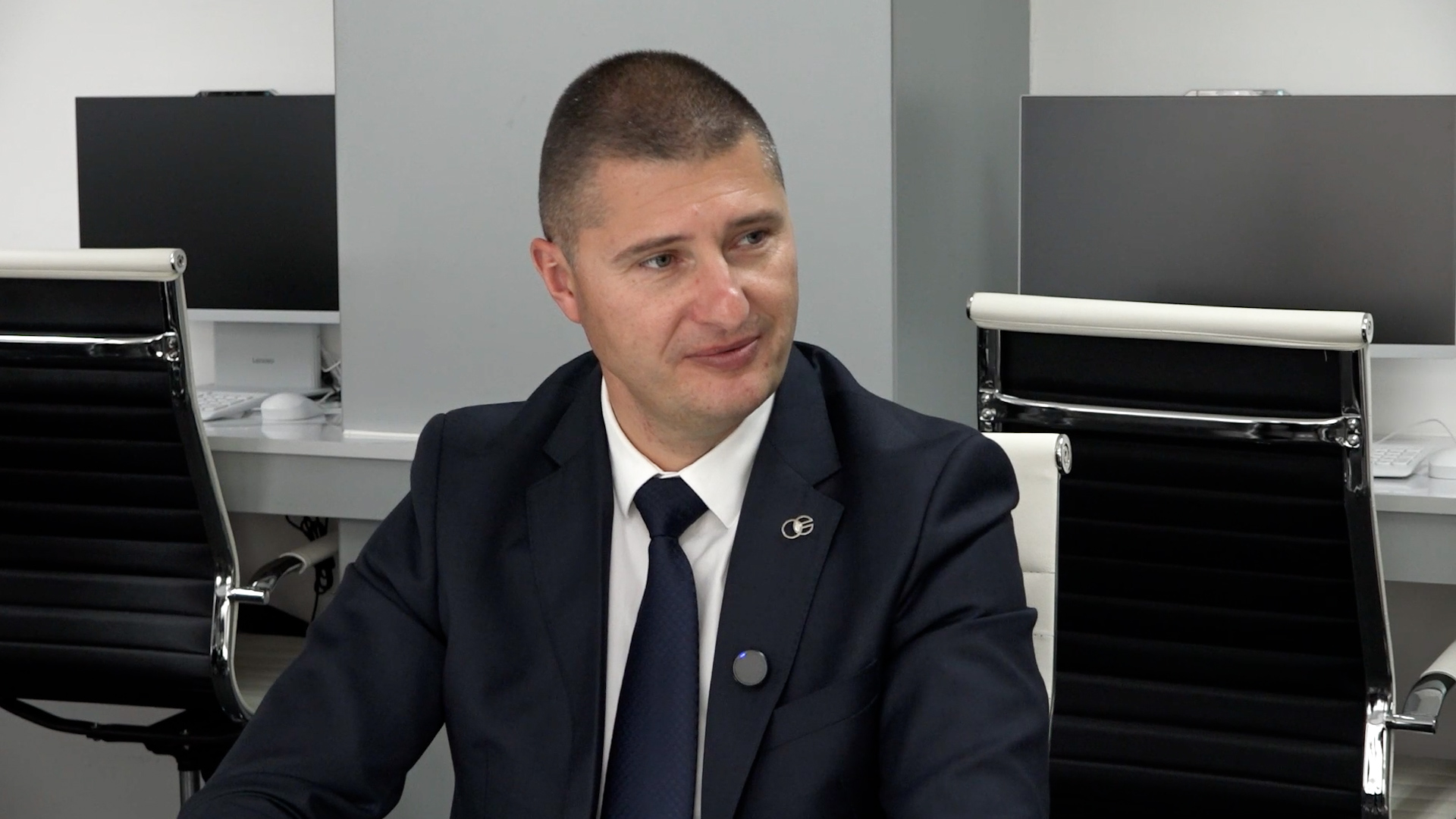
“The Economic Chamber is a collection of the most successful people gathered in one place, united by the Chamber’s President, who provides a vision for the future. The Chamber is an institution that is there when you need it the most, one that has a clear vision for economic development and creates policies that enable people to build a circle of successful business leaders across all fields,” said Aleksandar Manev, MBA, member of the Management Board of the Economic Chamber and CEO of Croatia Osiguruvanje AD, non-life insurance company Skopje, in the latest edition of Business Club with the Chamber President Branko Azeski.
He emphasized that there is no stronger institution than the Chamber, which brings together so many successful people, leaders, and opinion-makers. A large part of them, within the Chamber’s bodies, work in the professions in which they were educated and have developed over the years, which, according to Manev, is the key to success.
Speaking about the country’s economic situation, Manev assessed it as challenging but also full of prospects, and noted that if the conclusions adopted by the Chamber’s Management Board were followed more consistently, there would be no reason for concern. Manev is an optimist and believes in the Chamber’s human capital, expressing confidence that within about five years it will be possible to lay the foundations of a robust economy.
According to him, the Chamber has precisely defined three key priorities in its work:
1. Education as the pillar of every state – without a well-educated labor, the country has no future.
2. Development of solid, export-oriented companies, because without exports there is no economic growth.
3. Regional cooperation as a prerequisite for competitiveness.
Manev stressed that domestic companies must clearly express their needs, proposals, and ideas through the Chamber, because the basis for the country’s development is precisely the business sector.
“If policymakers behaved more corporately, it would be much easier to deal with the large number of challenges,” he added. He also pointed to the inefficiency of the public administration and the fact that certain priorities often do not receive the attention they require.
When asked whether subsidies contribute to development, Manev emphasized that their effect cannot be fully known until there is:
- a clear merit-based system,
- an analysis of the process – how much is given and in what way,
- measurable results (what has been accomplished, whether the company has introduced new forms of work, and whether and by how much exports have increased).
Discussing alternative forms of corporate financing, Manev assessed that we are still trapped in traditional methods and that transparency, promotion, and success stories are lacking, which would otherwise encourage their wider use. Due to his optimistic outlook, he believes that young people will change this very soon.
The continuation of the conversation focused on the insurance sector. Manev stressed that in the insurance business, the key is the identification and management of risks.
“It is not important to be first, but to be profitable, because results are not known until the last day of the calendar year,” he stated.
Last year, the company paid out 9 million euros in claims, including the largest property claim – around 4 million euros – paid within less than one year. According to Manev, what matters most is maintaining a fair and professional relationship with all clients.
Manev also addressed the issues within the insurance sector, which are frequently discussed within the Chamber’s relevant Association. He highlighted inflation and increased costs of products and services as the biggest challenges, while insurance prices remain unchanged.




 Progressive Academy