„Dimitrie Cupovski“ 13, 1000 Skopje +38923244000 ic@mchamber.mk
„Dimitrie Cupovski“ 13, 1000 Skopje +38923244000 ic@mchamber.mk
.jpeg)
.jpeg)
.jpg)
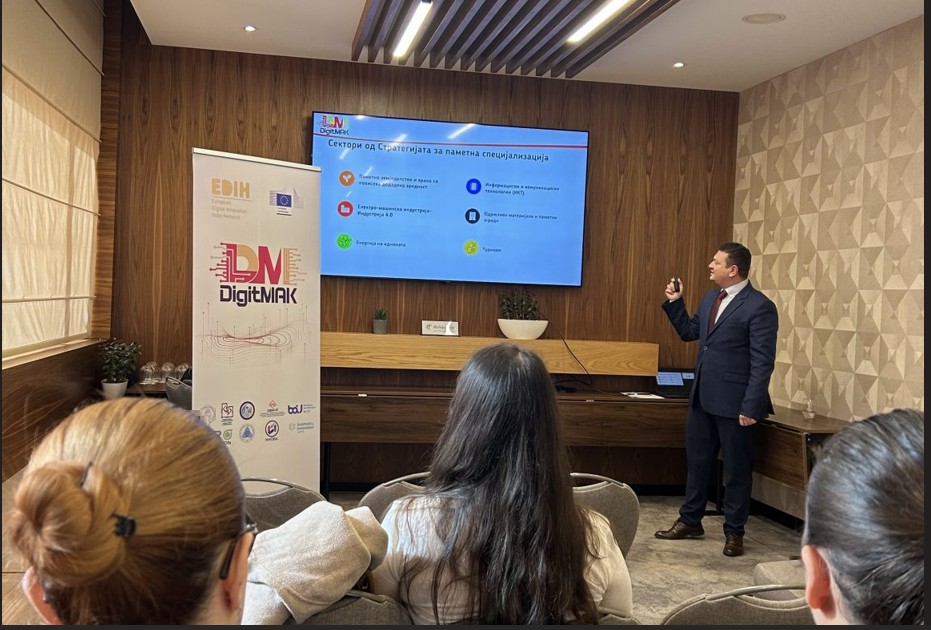
As part of the MicroBalkans 2026 conference, an Industry Meetup organized by the European Digital Innovation Hub DigitMAK took place on 25 September 25. The initiative is aimed at accelerating the digital transformation of Macedonian companies and fostering an innovative, competitive business sector.
The event featured two interactive workshops focused on business transformation opportunities through digitalization and on conducting direct digital maturity assessments of companies.
Mihajlo Donev, MSc, a member of the DigitMAK team, pointed out that while Macedonia is recording progress in digital skills, the development of advanced digital skills remains below the average of Western Balkan (WB) and EU countries. Data indicates that Macedonia ranks above average in mobile connectivity, yet lags behind in fixed broadband infrastructure. By 2025, 23% of SMEs utilized data analytics, 27% had adopted cloud services, and nearly 6% implemented artificial intelligence. Furthermore, 50% of small and medium-sized enterprises (SMEs) achieved at least a basic level of digital intensity in 2025, establishing a solid foundation for broader technological adoption. SMEs recorded their strongest performance in the digitalization of sales processes through e-commerce growth, with 23% selling online in 2025 and generating nearly 9% of their total turnover from online sales. He also introduced attendees to DigitMAK’s services, outlining the step-by-step roadmap for clients engaging with the project:
1. Needs Assessment – Specific requirements are identified and analyzed in direct communication with the companies.
2. Digital Maturity Assessment (DMA) – The company’s digital readiness is evaluated using the DMA tool to generate a personalized assessment report.
3. Action Plan Design – A customized action plan outlining specific digital solutions and milestones is created.
4. Implementation and Delivery – Digital solutions are delivered and implemented in accordance with the activities set out in the action plan.
During the event, participants had the opportunity to receive an on-site digital readiness assessment, representing an essential first step toward pinpointing areas for digital advancement within their organizations.
The event continued with a panel discussion on the future of digital transformation in Macedonia, featuring Stefan Andonovski, MA, Minister of Digital Transformation of the Republic of North Macedonia; Prof. Dr. Petre Lameski, DigitMAK Coordinator; Edmira Hani, Head of the Sector for Entrepreneurship and International Cooperation at INOVA; and Prof. Dr. Dimitar Trajanov, Coordinator of the "Vezilka" Artificial Intelligence Factory. The discussion centered on bridging the divide between national e-government strategies and real-world business needs, the role of EDIH DigitMAK, the integration of advanced technologies into the commercial environment, and opening new avenues for enterprises, the fintech sector, and non-banking financial institutions.
The primary takeaway delivered to the audience during the panel discussion, titled "Digital Macedonia & the Future of Financial Services: DigitMAK as a Leader of the Digital Future," was that digital transformation—like any organizational change—often encounters initial resistance and requires time for full adoption; however, the sooner it is embraced, the faster its benefits will materialize. Minister Andonovski highlighted government efforts to consistently execute the Digital Transformation Strategy and establish an institutional digital framework that ensures rapid business access to public services. He added that the Ministry provides direct support channeled through European Digital Innovation Hubs to SMEs, underscoring the Economic Chamber's pivotal role in engaging, informing, and preparing companies for digital transition.
"The objective of the digital transformation process is to identify organizational bottlenecks and resolve them through process digitalization, while the final stage of our engagement is the integrated adoption of artificial intelligence as the highest maturity level for any entity, whether a private firm or a public institution," noted Prof. Dr. Lameski. DigitMAK’s three-pillar framework—Educate, Digitalize, Finance—is structured specifically to deliver tangible guidance across each client's roadmap, enabling domestic businesses to take decisive steps toward advanced digital solutions.
The panel also addressed institutional mechanisms facilitating corporate access to finance for critical investments in green and digital transformation—a primary focus area for INOVA through its Greening Business Facility. INOVA representative Ms. Hani emphasized that digital readiness assessments and transformation roadmaps provided through DigitMAK offer vital data inputs, enabling the Agency to target its funding toward impactful support programs and policies that align with the specific sectors and priorities outlined in those roadmaps.
Prof. Dr. Trajanov reflected on Macedonia's "digital paradox," presenting figures demonstrating a highly developed domestic ICT sector per capita that outpaces the EU per capita average, contrasted against general digital skills, where the country trails EU benchmarks. A similar divergence is evident in Macedonia's broader digitalization levels compared to the EU. Therefore, Prof. Dr. Trajanov underscored that initiatives such as DigitMAK, the Vezilka AI Factory, and the EuroCC Hub for High-Performance Computing are essential to closing this gap. Macedonia must actively work to develop its own sovereign AI models and digital infrastructure to safeguard national digital sovereignty. He concluded by urging stakeholders not to fear artificial intelligence, but rather to focus on the rigorous application of regulatory standards to guarantee the security and privacy of processed data.
The DigitMAK Industry Meetup took place within the framework of the MicroBalkans 2026 Conference, which brought together over 200 participants from banking and non-banking financial institutions, fintech and regional IT firms, investors, development finance institutions, startups, scale-ups, SMEs, and international and regional bodies.
DigitMAK serves as a collaborative platform linking the business community, academia, and the public sector, providing companies with access to expertise, technological infrastructure, and strategic guidance to implement advanced digital solutions, including artificial intelligence.



 Progressive Academy